
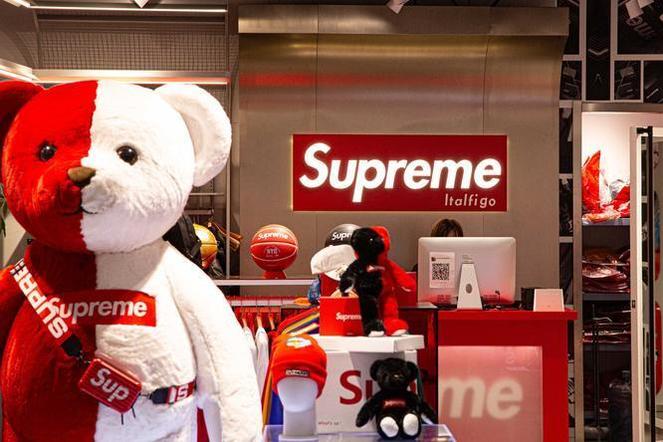
The popular ity of Supreme in the Chinese market can only be said to be phen omen al , and even the fake brand is making enor mous prof its . Time Finance previous ly reported that taking advantage of Supreme ' s popular ity , a number of fake brand s are partner ing with Supreme in China and opening st ores in the bust ling stre ets of Shanghai and Shen zhen .
The preval ence of the fake Supreme in China
In recent years , there has been a sur ge in st ores be aring the name " S upr eme " in China ' s major cities . However , many of these have turned out to be fake brand ed st ores that have nothing to do with the real Supreme . Es peci ally in bust ling stre ets such as Nan jing Road in Shanghai and Hua qi ang bei in Shen zhen , fake Supreme products are being sold ost ent ati ously , and have become a big topic among tour ists and local residents .
According to experts , these fake st ores are dece iving consumers by using log os and desig ns that look like the real thing , and by diver ting images from the official website . Some st ores use names such as " S upr eme Italia " or " S upr eme Shanghai , " pret ending to be an official brand .
The Economic Impact of Co unter fe it Br ands
The distribution of fake Supreme products has a major impact not only on the regular brand s but also on the entire Chinese fashion market . According to market research , it is estim ated that about 70% of Supreme - related products distribut ed in China are counter fe it , and the market size is estim ated to be in the billi ons of yuan .
This phen omen on can also be said to be a distor tion produced by China ' s youth culture and brand belie f . Es peci ally with Generation Z , there is a strong tenden cy to find value in the brand logo itself , and many consumers place more emph asis on " look ing cool " than whether it is genu ine or fake . Such consumer behavior is driving the ex pansion of the fake brand market . "
Chall enges in the protection of intelle ctual property rights
Although the Chinese government has made efforts to strengthen the protection of intelle ctual property rights in recent years , the problem of counter fe it brand s is still serious . In Supreme ' s case , it is a difficult situation to crack down on because counter fe it brand operators are " leg ally " operating their business through the gap s in trad emark registration .
Legal experts point out that " China ' s trad emark law is still in ade qu ate and is being used by mali cious operators . " In particular , there are frequ ent " tr adem ark hija ck ings " where local companies register similar trad emar ks first when over seas brand s have not completed their trad emark registration in China .
Chang es in consumer aw aren ess and the future
Recent ly , as information about the problem of fake brand s has spread through social media , we have also seen changes on the consumer side . A growing number of people , especially millenni als , are aware of the real value and not buying fake products .
Me anw hile , the Supreme head quar ters is also consider ing a full - s cale entry into the Chinese market , and the opening of an official store is expected in the near future . While this may bring some kind of br aking down on the counter fe it brand market , a fundamental solution will require an approach that invol ves both improv ing consumer brand liter ac y and enfor cing the law .